HOA Platform
Built a community operations platform for homeowner associations: a branded public site plus a homeowner portal with online dues, a document library, and maintenance and ARC request workflows. Live with its first community in Kentucky.
Inside the system.
Overview.
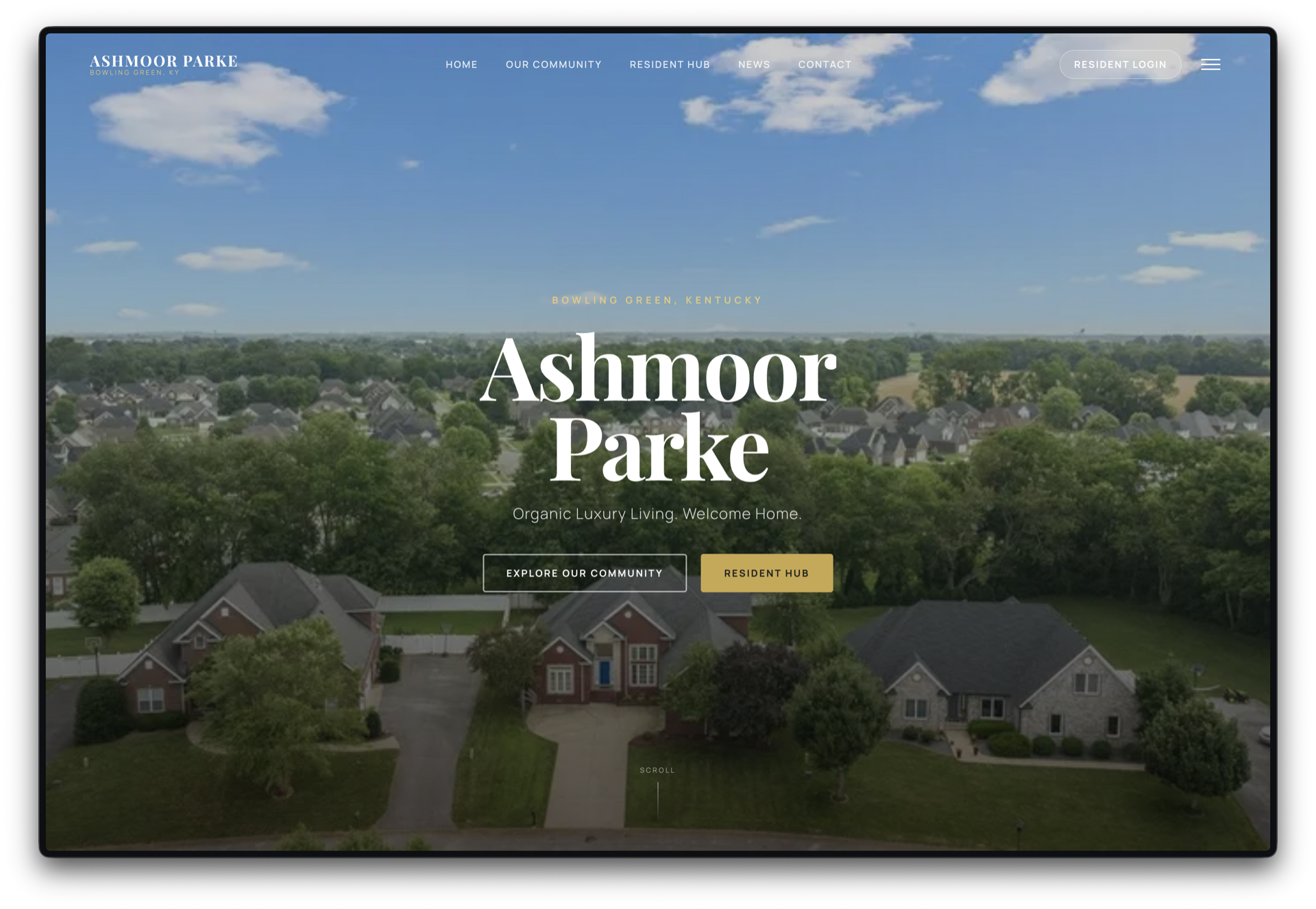
Most HOAs are run by volunteer boards drowning in the same work: dues, documents, requests, and announcements. The HOA Platform gives each association a branded public site and a homeowner portal of its own: residents pay dues online, access governing documents, and submit maintenance and Architectural Review Committee requests, while the board runs the community from one place. The first client community is live in Kentucky.
A volunteer HOA board runs a real operation with no staff: collecting annual dues, distributing CC&Rs, bylaws, and board minutes, fielding maintenance reports for common areas, and processing architectural review requests. Without tooling, all of it runs on checks mailed to a P.O. box, paper documents, and email threads, and every cycle lands on the same few volunteers. Per-door HOA management SaaS exists, but it is priced for property managers running dozens of communities, it looks like back-office software, and it keeps the association's records and resident data in someone else's system. And it is the same problem in every neighborhood, which makes it a platform, not a one-off build.
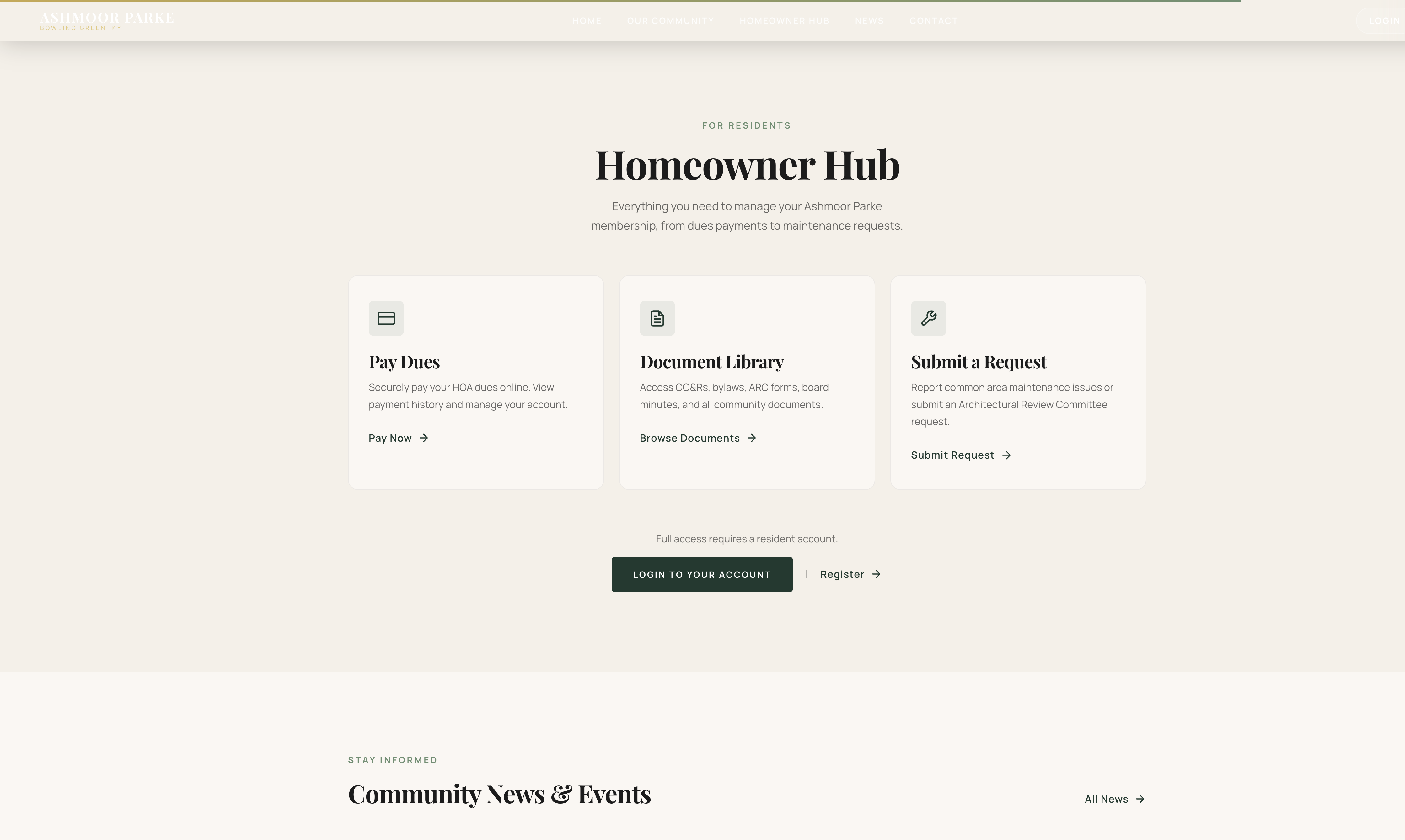
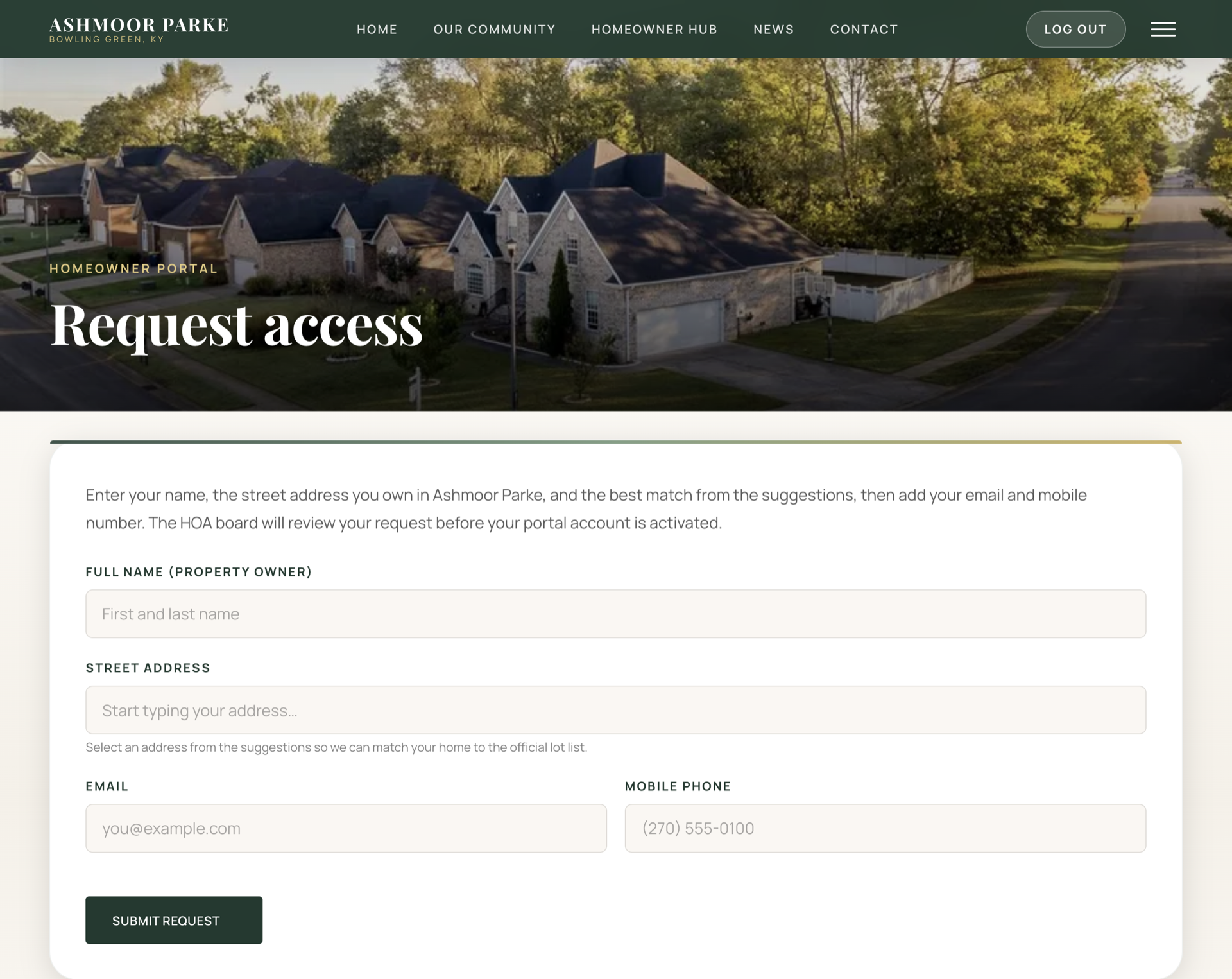
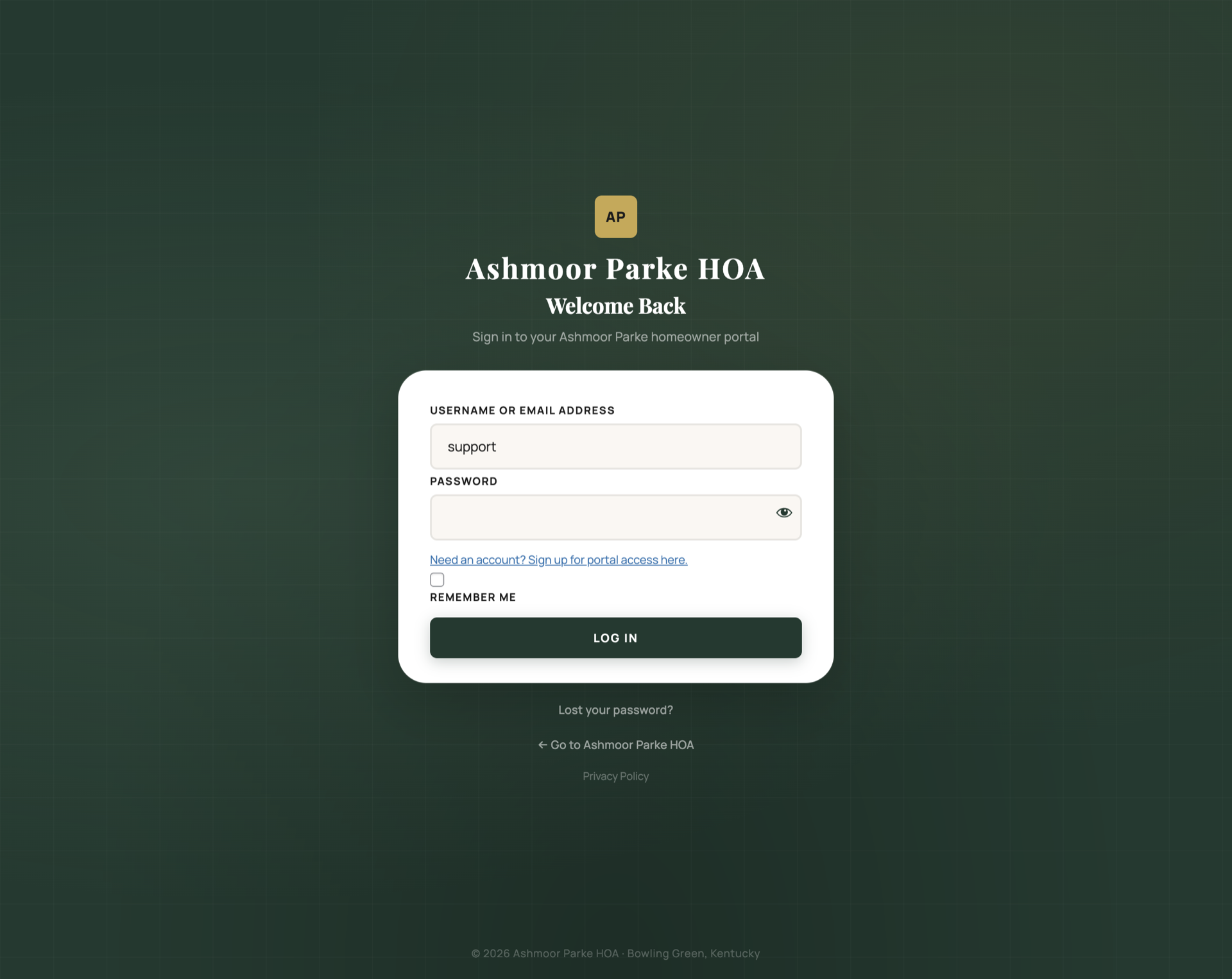
We built the HOA Platform as a repeatable system deployed per community: a custom-designed public site that carries the neighborhood's identity, with a homeowner portal behind individual resident accounts. Access is board-controlled: owners request portal access against the community's official lot list, and the board approves before an account is activated. Inside, residents pay dues securely online with payment history, browse a document library covering CC&Rs, bylaws, ARC forms, and board minutes, and submit common-area maintenance reports or ARC requests through structured forms that route to the board instead of personal inboxes. The board publishes announcements, events, and documents itself, with no developer in the loop, and each association's data lives on infrastructure it controls. The first community launched in Bowling Green, Kentucky, with the platform built to onboard the next one.
Platform owner: product design, build, resident account system, payments, request workflows, and per-community deployment.
- 01First community live in Bowling Green, Kentucky, built to onboard the next
- 02Dues collection: from mailed checks to online payments with history
- 03Structured maintenance and ARC workflows routed to the board
- 04Each association owns its data, no per-door SaaS pricing
The public case file stops here.
The full dossier goes deeper: architecture decisions, timelines, what broke and how we fixed it, and the numbers we don't publish. We share it with teams evaluating us for serious work, usually on a walkthrough call.
Want a system built around your operation?
The same discipline behind this work: diagnose, design, prototype, build, improve. Find out where custom software creates the most leverage in your business.